

Jai Nitāi!
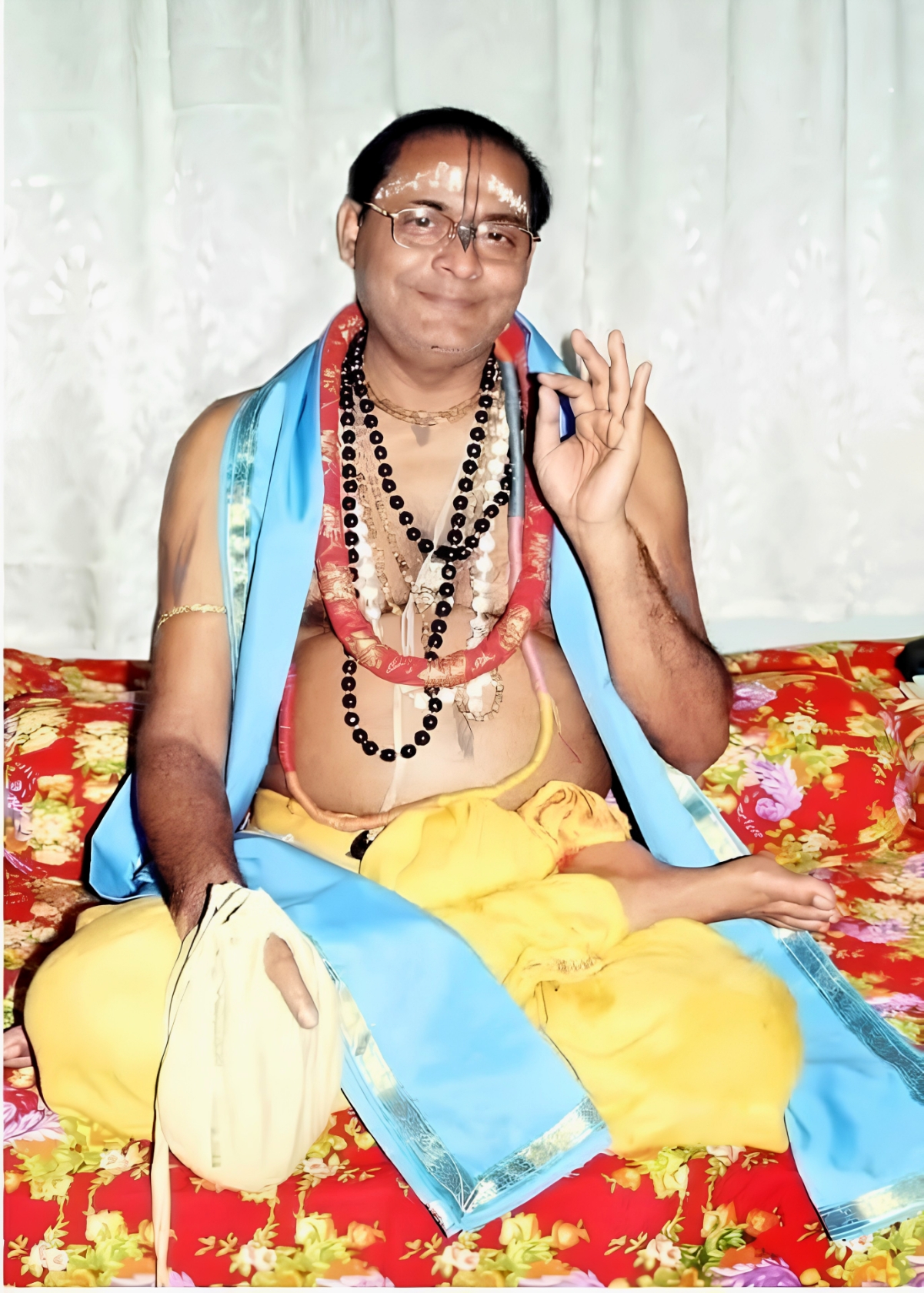
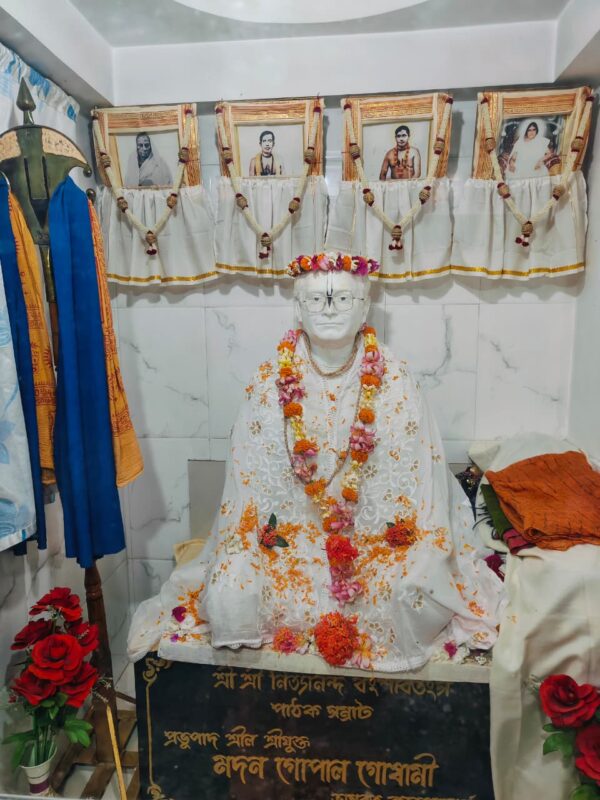
Today is the most auspicious occasion of tirobhāva (disappearance) tithi of 13th Descendant of Lord Nityānanda, Pāthak Samrāt Prabhupāda Śrīla Madangopāl Gosvāmī. One may wonder how the disappearance day can be auspicious and celebrated as some kind of big festival; it would be easier to understand this for the appearance day. But for Vaiṣṇavas and ācāryas, the disappearance day is more important and celebrated more than the appearance day, because on that day everyone cries from missing that Vaiṣṇava and remembers his teachings.
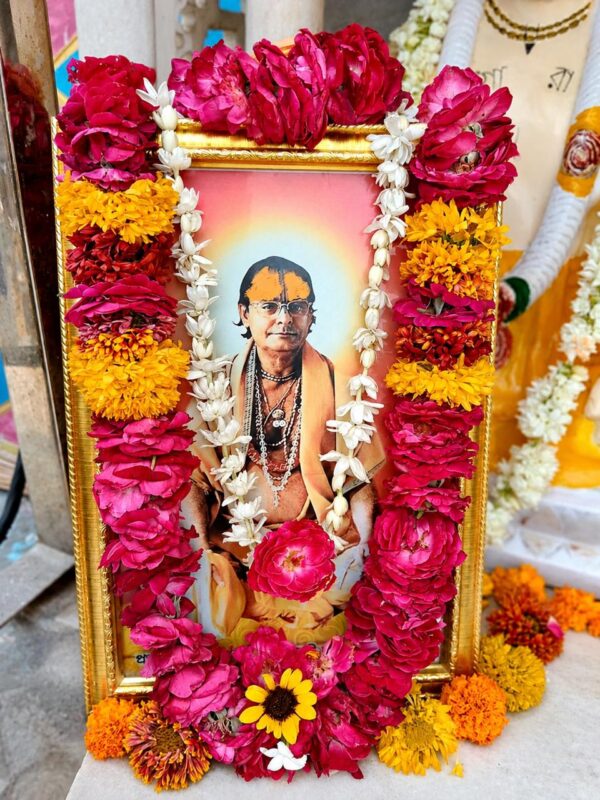
“Where did my Prabhu go? How unfortunate I am that I cannot associate with him or even have his darśana! He has left such an amazing treasure for me, in the form of deities, scriptures, bhajanas and teachings!” For this reason, the disappearance day is also called viraha mahotsav.
It is a special blessing for us who are not able to really cry for Bhagavān, but for a Vaiṣṇava who we have known and loved in a human form before our eyes, it is very natural to cry in separation, and by these tears our hearts are purified.
For Viṣṇu-tattva, for all different forms of Bhagavān, the appearance day is celebrated, because for Bhagavān there is no disappearance day. Bhagavān is present everywhere eternally, His pastimes are eternal and always ongoing—they just sometimes become unmanifest from material senses. That is why we don’t celebrate the disappearance day of Bhagavān, but only appearance days like Gaura Pūrṇimā, Janmāṣṭamī, etc.
Vaiṣṇavas also never die—an ācārya remains forever in his teachings, so this is what we should remember on his disappearance day. We may regret that we can no longer see him or talk to him in this body, or maybe we never were able to, but we are very fortunate that he left his teachings. This is a true offering, a true celebration of our Dādu Prabhu’s memory, to remember his teachings and try to imbibe the very special mood of surrender.
In the following video, 14th Descendant of Lord Nityānanda, Prabhupāda Śrīla Nityagopāl Gosvāmī sings and gives the meaning of one of his father’s self-composed bhajanas:
His words, spoken from deep bhava and emotion, will help us understand the special mood of our paramparā, how we should actually pray to Bhagavān, and what surrender actually is. He presents the commentary as a conversation between Bhagavān and a devotee.
প্রভু তোমার চরণ ছাড়া আর কিছু নাহি কামনীয়,
যত দূরে চলে যাই, নিজ হাতে কাছে টেনে নিও।।
আর কিছু নাহি কামনীয়…….
বাহিরে মজিলে মন, হইও হৃদি রমণ,
হৃদয়ের মাঝে তব, অনুপম প্রেম ঢেলে দিও।
প্রভু তোমার নিজের গুণে, হয়ো তুমি মোর প্রিয়তম।।
আর কিছু নাহি কামনীয়……….
প্রভু তুমি যে কতো আপনার,
আমি জানিয়াও যদি যাই ভুলে,
আপনার হাতে তুমি, মোহান্ধ আঁখি দিও খুলে।
আমারে তোমার করি নিও, নিও, নিও প্রভু,
আমার বলিতে যেন, নাহি কিছু থাকে মোর স্বীয়।।
আর কিছু নাহি কামনীয়…
প্রভু তোমার চরণ ছাড়া, আর কিছু নাহি কামনীয়।।
Prabhu tomāra caraṇa chāṛā āra kichu nāhi kāmanīya,
Yata dūre cale yāi, nija hāte kāche ṭene niyo.
Āra kichu nāhi kāmanīya…
Bāhire majile mana, ha’io hṛdi-ramaṇa,
Hṛdayera mājhe taba, anupama prema ḍhele diyo.
Prabhu tomāra nijera guṇe, hayo tumi mora priyatama.
Āra kichu nāhi kāmanīya…
Prabhu tumi ye kato āpanāra,
Āmi jāniyāo yadi yāi bhule,
Āpanāra hāte tumi, mohāndha āṅkhi diyo khule.
Āmāre tomāra kari niyo, niyo, niyo prabhu,
Āmāra balite yena, nāhi kichu thāke mora svīya.
Āra kichu nāhi kāmanīya…
Prabhu tomāra caraṇa chāṛā, āra kichu nāhi kāmanīya.
O Lord, apart from Your lotus feet, I desire nothing else.
Even if I wander far away from You, please take me back with Your own hands and draw me close again.
Other than Your lotus feet, I have no cherished aspiration.
When my mind becomes absorbed in the attractions of the external world,
please become the beloved of my heart from within.
Into the depths of my heart, pour the incomparable nectar of Your divine love.
O Lord, by the power of Your own infinite sweetness and virtues,
please make Yourself the dearest object of my love.
I desire nothing else.
O Lord, You are truly my own eternal well-wisher and beloved.
Even if I know this and yet somehow forget You,
then with Your own merciful hand, open my eyes, blinded by the darkness of illusion.
Make me Yours completely, O Lord—
Yours, Yours alone.
Make my everything Yours. Let nothing remain that I can call “mine.”
May every trace of separate ownership and false possessiveness disappear.
Apart from Your lotus feet, I desire nothing.
Other than Your shelter, I seek nothing at all.
Prabhu tomāra caraṇa chāṛā āra kichu nāhi kāmanīya
Bhagavān: “Really? You don’t desire anything other than My lotus feet? But your mind is attached to so many things: your wife, children, so many sense objects. And with all this, you say you don’t desire anything apart from My lotus feet?”
Sādhaka: “Yes, my mind is wandering all over the place. I am thinking of so many things, I am attached to so many sense objects. I know that. But however far I go away, with Your own hand, with Your own compassion, please bring me back again. Bring my mind again to Your lotus feet. Āra kichu nāhi kāmanīya. I don’t desire anything else. My mind will wander, I know that for sure. I’ll go here and there, again and again, but please, no matter where it wanders off, hold me with Your own hand and by Your causeless mercy bring me close to You. Make my mind attached to Your lotus feet.”
Bhagavān: “Ok, you are saying to Me that however far your mind takes you, I should again bring you back with My own hand. But how many times have I done that already? I am doing it all the time! When I bring you closer to Me, after sometime you wander off again. You run away. What to do?”
Bāhire majile mana, ha’io hṛdi-ramaṇa,
Hṛdayera mājhe taba, anupama prema ḍhele diyo.
Sādhaka: “Yes, I know again and again this is happening. If I sit in one place, it will immediately start thinking of so many different things. But please, despite this, put prema in my heart—pour it directly into the center of my heart. Then my mind will no longer wander here and there”
Bhagavān: “Prema ḍhele diyo? Why should I just give you prema like that? If you want to get prema, you must first be attached to Me. First you should love Me. Without that, how will I give you prema?”
Sādhaka: “No, I am not able to love You. Prabhu tomāra nijera guṇe, hayo tumi mora priyatama. I’m not really capable of loving You. Āmi to bhālobāsite pāri nā, kintu tumi āpanāra nijera guṇe, hayo tumi mora priyatama—I can’t love You myself but by Your own special causeless mercy, You become my priyatama (beloved).”
Prabhu tumi ye kato āpanāra,
Āmi jāniyāo yadi yāi bhule,
Āpanāra hāte tumi, mohāndha āṅkhi diyo khule.
Sādhaka: “Prabhu, You are the closest to me, the most dear to me. You are always residing in my heart. But knowing this, if I still somehow forget You, please don’t forget me. By Your own hand please open my eyes. Please wake me up from this illusion of Maya. Even if I forget You, please, remember me. Please never forget me.”
Āmāre tomāra kari niyo, niyo, niyo prabhu,
Āmāra balite yena, nāhi kichu thāke mora svīya.
Sādhaka: “Please Prabhu, make me Yours! Make me completely Yours in such a way that nothing remains mine. Everything becomes Yours. I don’t want anything else to be mine other than You. Whatever I have, all my possessions, take them—because I can’t give these things to You. On my own, I’m not capable of that. I can’t give you everything, I can’t love You. So please take it all Yourself, by Your causeless mercy. Take me. Āmāra balite yena, nāhi kichu thāke mora svīya. Āra kichu nāhi kāmanīya… I can’t give anything on my own, so You take everything and become my Beloved.”
It is just like how Kṛṣṇa stole the hearts of the gopīs and took away everything from them, in such a way that internally they knew nothing else than Kṛṣṇa. Remember how the gopīs called to Kṛṣṇa in Gopī-gītā. They had no control over their own hearts but could only pray for Him to come just once and give them their lives back. “We can’t live peacefully and we can’t even die peacefully because our hearts and our lives are with You. We can’t bear to live anymore but how can we give up our life when You stole it?”
This bhajana composed by Prabhupāda Śrīla Madangopāl Gosvāmī expresses the mood of śaraṇāgati (complete surrender) and helpless dependence upon divine grace, where the devotee prays not merely for love of God, but for God Himself to actively make the devotee capable of loving Him.
This article is a very small offering to the lotus feet of Prabhupāda Śrīla Madangopāl Gosvāmī, and to the entire paramparā whose wisdom he so beautifully offered to the world. For those of us who were never able to have his darśana physically, we are still extremely blessed that we can receive his teachings through his renowned sons, and through the treasury of bhajanas that he left behind.
Please forgive any mistakes we have made in this text. Although imperfectly presented, may it give you some glimpse of our Dādu Prabhu’s extraordinary depth and sweet mood!
Nityānanda-vaṁśa dīpaṁ Yadugopāla-nandanam,
Gaura-prema-pracārakam vande Madanagopālam